Toggl Alternative for European Teams
Time tracking, project timesheets, expenses, absences, and invoicing in TimeStatement
Toggl is a known tool for time tracking. TimeStatement is the Toggl alternative for teams that want tracked time to flow directly into projects, client work, expenses, absences, reports, and professional invoices.
TimeStatement vs Toggl
 |
 |
|
|---|---|---|
| Price per user | from EUR 3.50 per month | from USD 9 per month |
| Project time tracking | ✓ | ✓ |
| Work time tracking | ✓ | ✓ |
| Absence management | ✓ | - |
| Expense tracking | ✓ | - |
| Native invoicing from tracked services | ✓ | - |
| Custom invoice design | ✓ | - |
| Multiple invoice templates | ✓ | - |
| Multi-client capable | ✓ | - |
| European business focus | ✓ | - |
| Badge or fingerprint terminal | ✓ | - |
Why choose TimeStatement as a Toggl alternative?

When is it worth switching from Toggl?
Toggl Track works well when your main goal is timer-based project time tracking and reports. TimeStatement is a better fit when time tracking must become the basis for absences, expenses, local business workflows, project controlling, and client invoicing.
With TimeStatement, teams can manage project rates, budgets, work time, expenses, absences, and billing in one system instead of moving data between several tools.
Comparing several tools? You may also want to review our Clockify Alternative page.
Toggl vs TimeStatement: timer-first tracking or business workflow?
Toggl is often chosen by teams that want a quick timer, clean reports, and lightweight project tracking. That is useful for freelancers, agencies, and remote teams that primarily need visibility into where time goes.
TimeStatement is built for the next step after tracking: project rates, work time, absences, expenses, approvals, and invoices are connected in the same workflow. This makes the comparison especially relevant for service companies that want fewer exports, fewer interfaces, and clearer billing data.
- Choose Toggl if simple timer adoption and productivity reporting are the main priorities.
- Choose TimeStatement if tracked time should feed project controlling, expenses, absences, and client invoicing.
- For European teams, TimeStatement also focuses on local workflows such as currencies, invoice layouts, and business documents.
How TimeStatement works
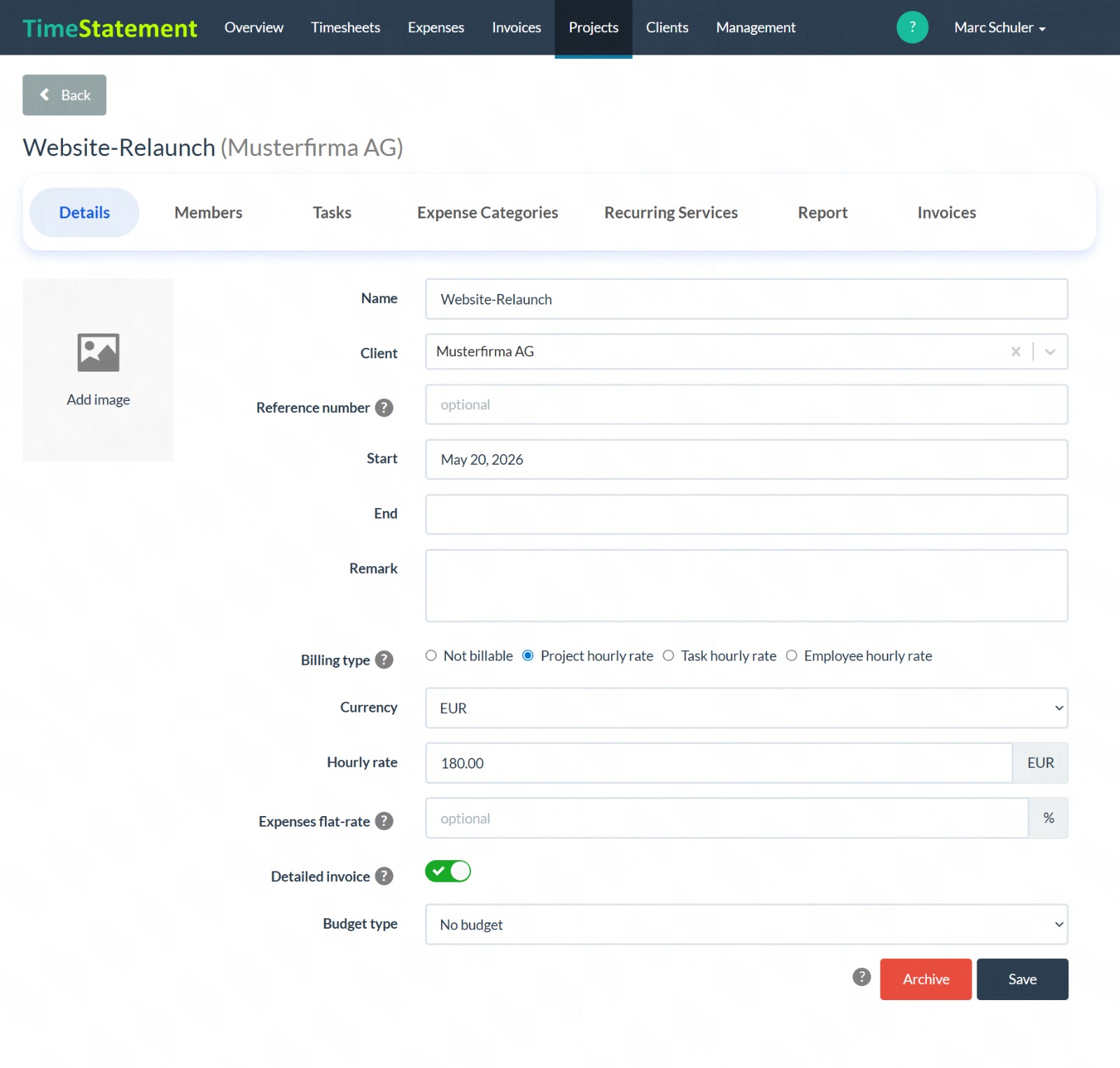
Set up clients, projects, and team members
Create customers, projects, tasks, rates, and billing rules. TimeStatement turns those settings into a reliable base for reporting and invoicing.
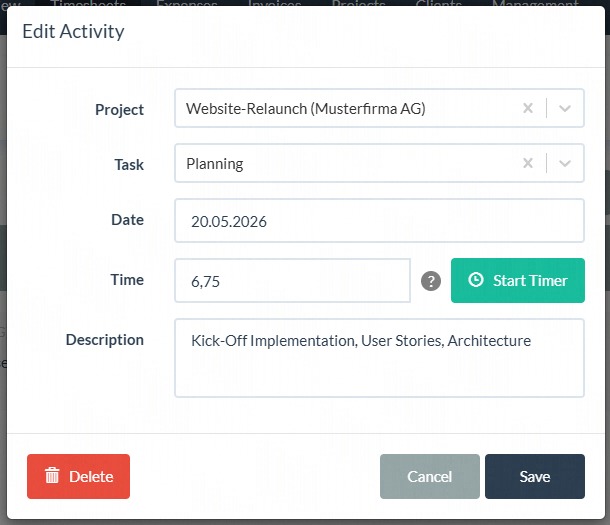
Track time, absences, and expenses
Your team tracks project time by browser, smartphone, stopwatch, or terminal. Absences and expenses can be assigned to the right client and project.
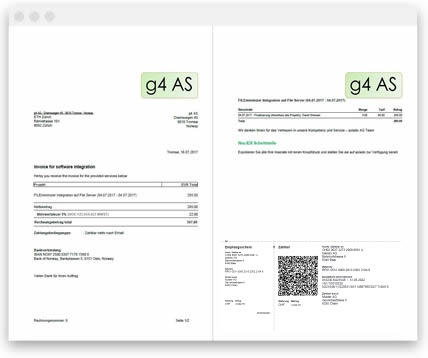
Report and invoice
Reports show billable hours, budgets, project progress, and expenses. Approved services can be turned into professional invoices in your own corporate design.
Comparison Notes
How was this comparison prepared?
This page compares TimeStatement with Toggl from the perspective of our own product and the workflows we support. It is intended to help readers understand typical use cases, strengths, and differences between the solutions. Information about Toggl is based on publicly available material, product research, and the information available to us in March 2026.
Software products change over time. Features, prices, integrations, and plan limits may be updated or may vary by subscription tier. Please treat this page as a practical orientation, not as a complete technical audit or legal assessment. All trademarks belong to their respective owners; TimeStatement is not affiliated with Toggl unless explicitly stated.
You may also be interested in:
Project time tracking
Assign hours to clients, projects and tasks. Stay on budget and bill every minute.
Learn more →Time tracking
Clock in, run timers or enter hours manually — on web, mobile or terminal.
Learn more →Absence management
Request, approve and report holidays, sickness and other leave in one place.
Learn more →